

IBM Cloud Security Dashboard
Cloud security solutions encompassing consulting, assessment, monitoring, migration, deployment, hardening, and strategic services tailored for global enterprises.
Increased overall operational efficiency by up to 12%
Speed up reporting process by 40%
Reduce manual effort by 32%
Context
The Problem:
Recognizing the challenge faced by users navigating multiple 3rd-party tools and dashboards to comprehend and report on various cloud environments, IBM Security aimed to enhance this experience for our enterprise clientele. To address this, we embarked on a mission to provide customers with a unified platform - a single pane of glass. This interface offers a clear, actionable, and robust view of their intricate cloud landscapes.
Who are our user?
Security Operation Analysts
Cloudadoption consultants
SecurityDelivery Project Executives
The Solution:
To address this, we embarked on a mission to provide customers with a unified platform - a single pane of glass. This interface offers a clear, actionable, and robust view of their intricate cloud landscapes with the further business objectives for encapsulating live, real time data where the SOCs could take action, raise tickets for potential threats in one quick view

Tools:
Figma
JIRA
KabBan
Mural
My Role:
UX Research
Prototype
Journey Map
Dev Hand-off with Redlines
Timeline:
4 Months
I led the end-to-end UX design
Collaborated with multiple stakeholders and business heads to translate their plan and pain points into intuitive design solutions, improving both operational efficiency and user experience
Research.
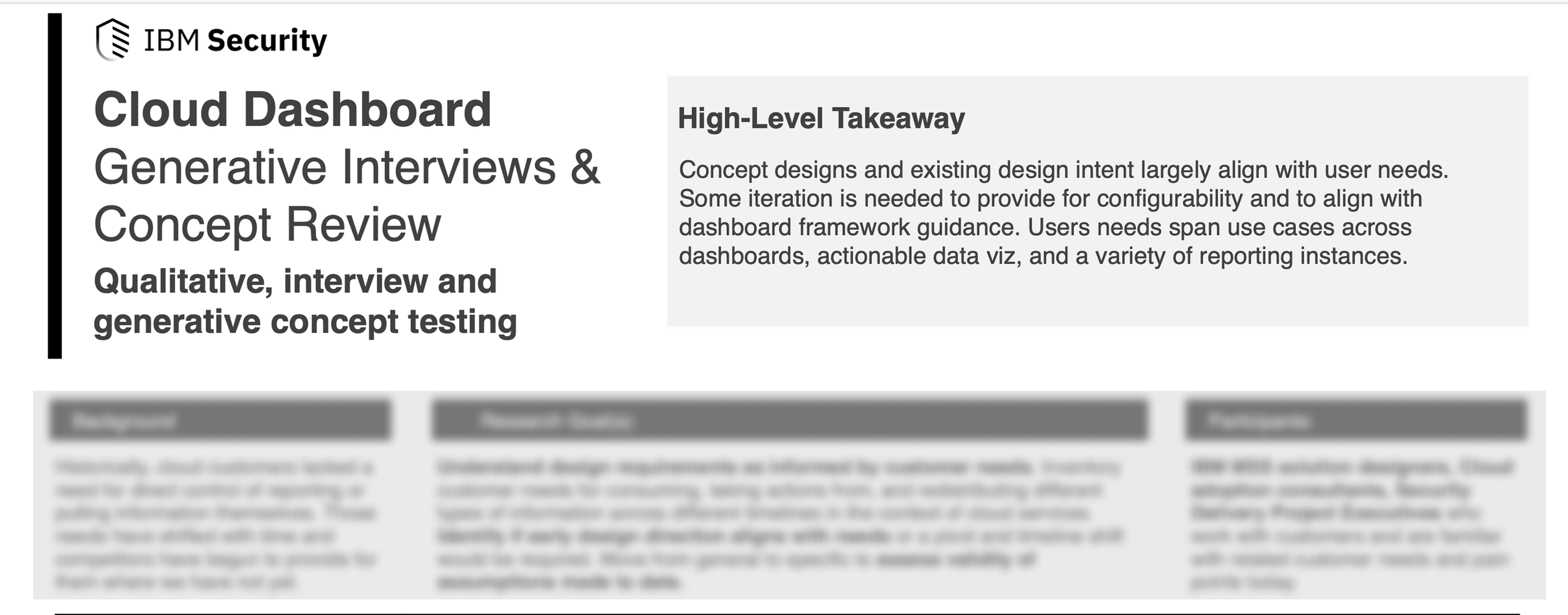
Research Goals
Understand design requirements as informed by customer needs. Inventory customer needs for consuming, taking actions from, and redistributing different types of information across different timelines in the context of cloud services.Identify if early design direction aligns with needs or a pivot and timeline shift would be required. Move from general to specific to assess validity of assumptions made to date.
Background
Historically, cloud customers lacked aneed for direct control of reporting orpulling information themselves. Thoseneeds have shifted with time andcompetitors have begun to provide forthem where we have not yet.
Design.
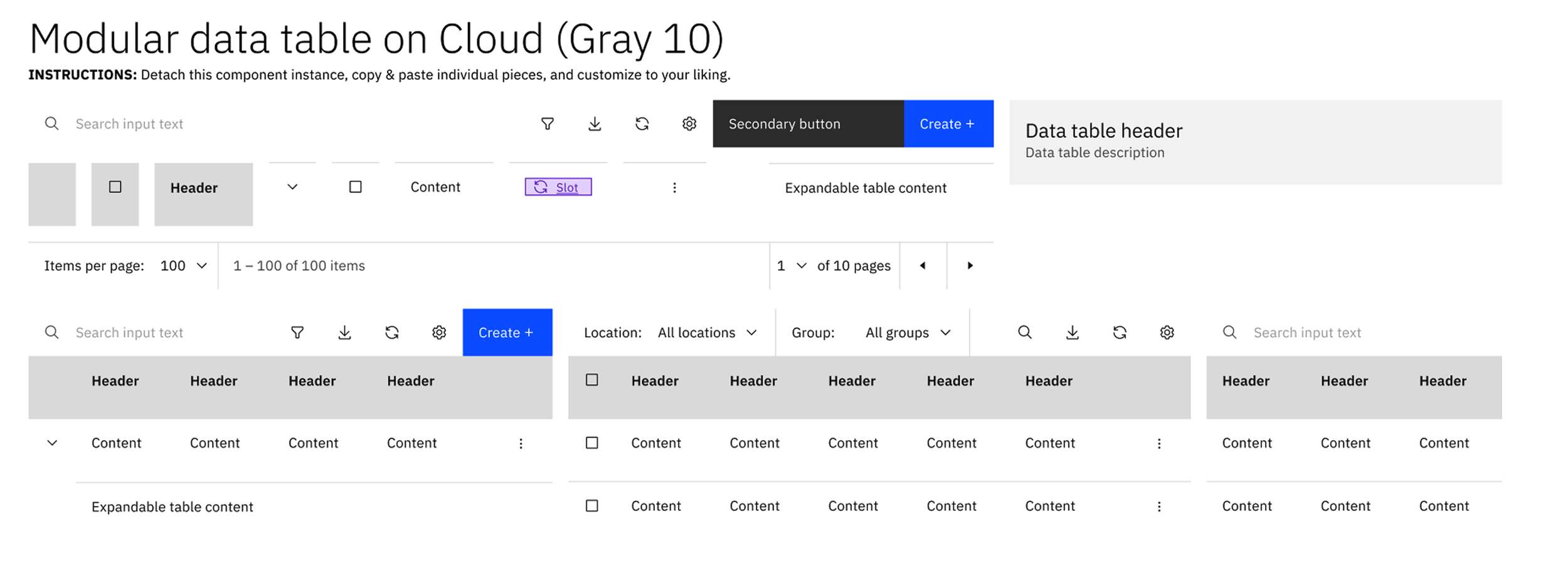
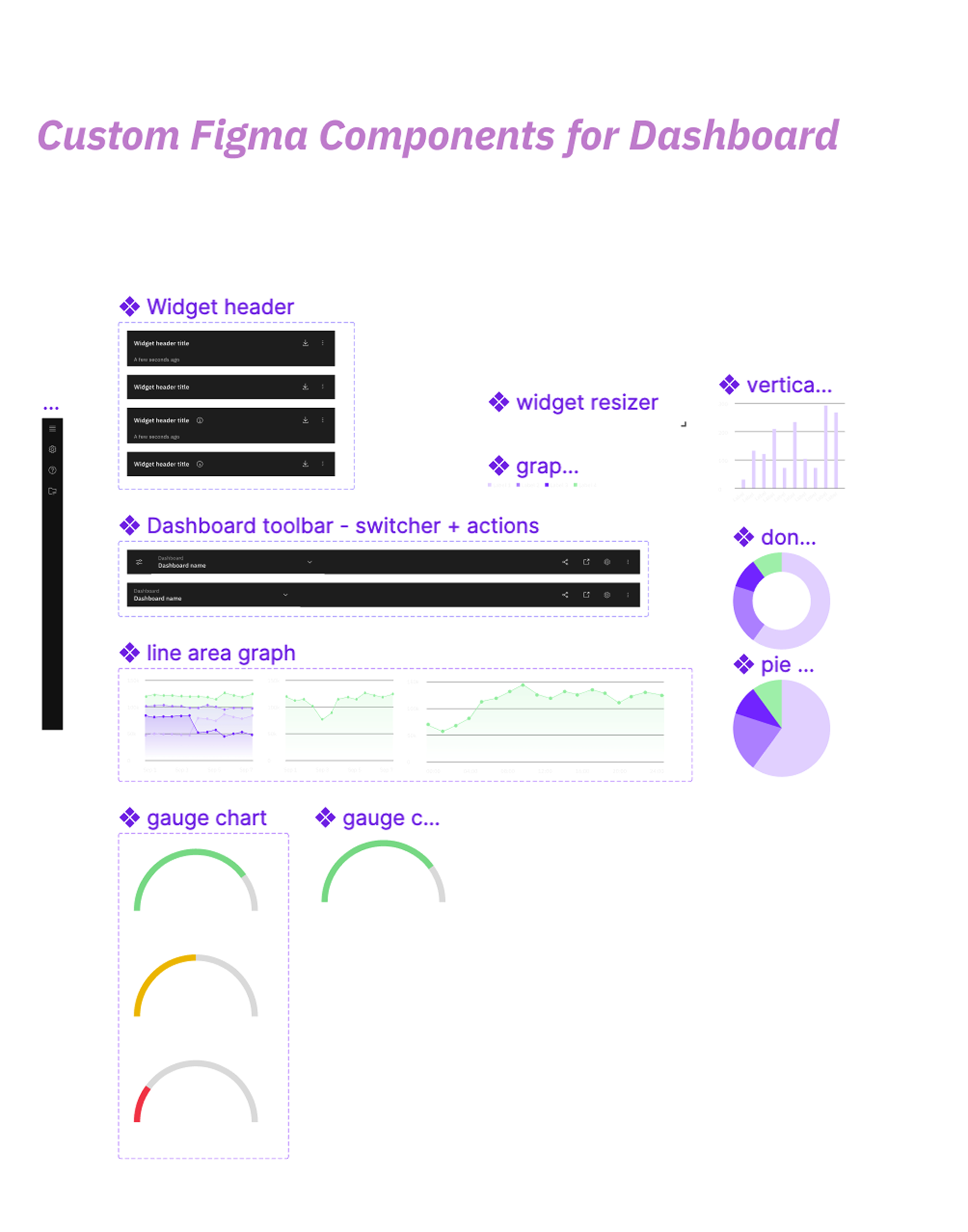
Style guide
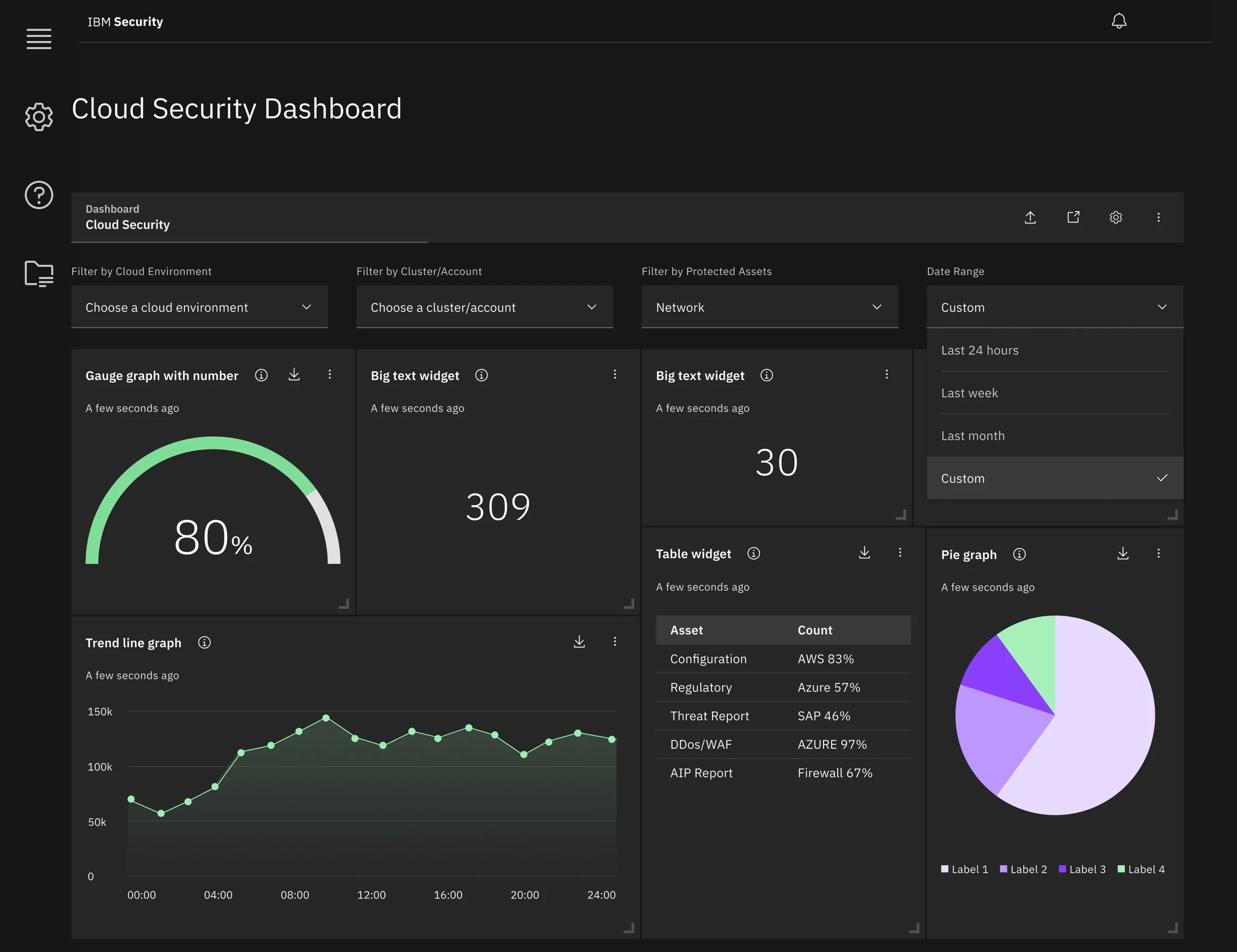
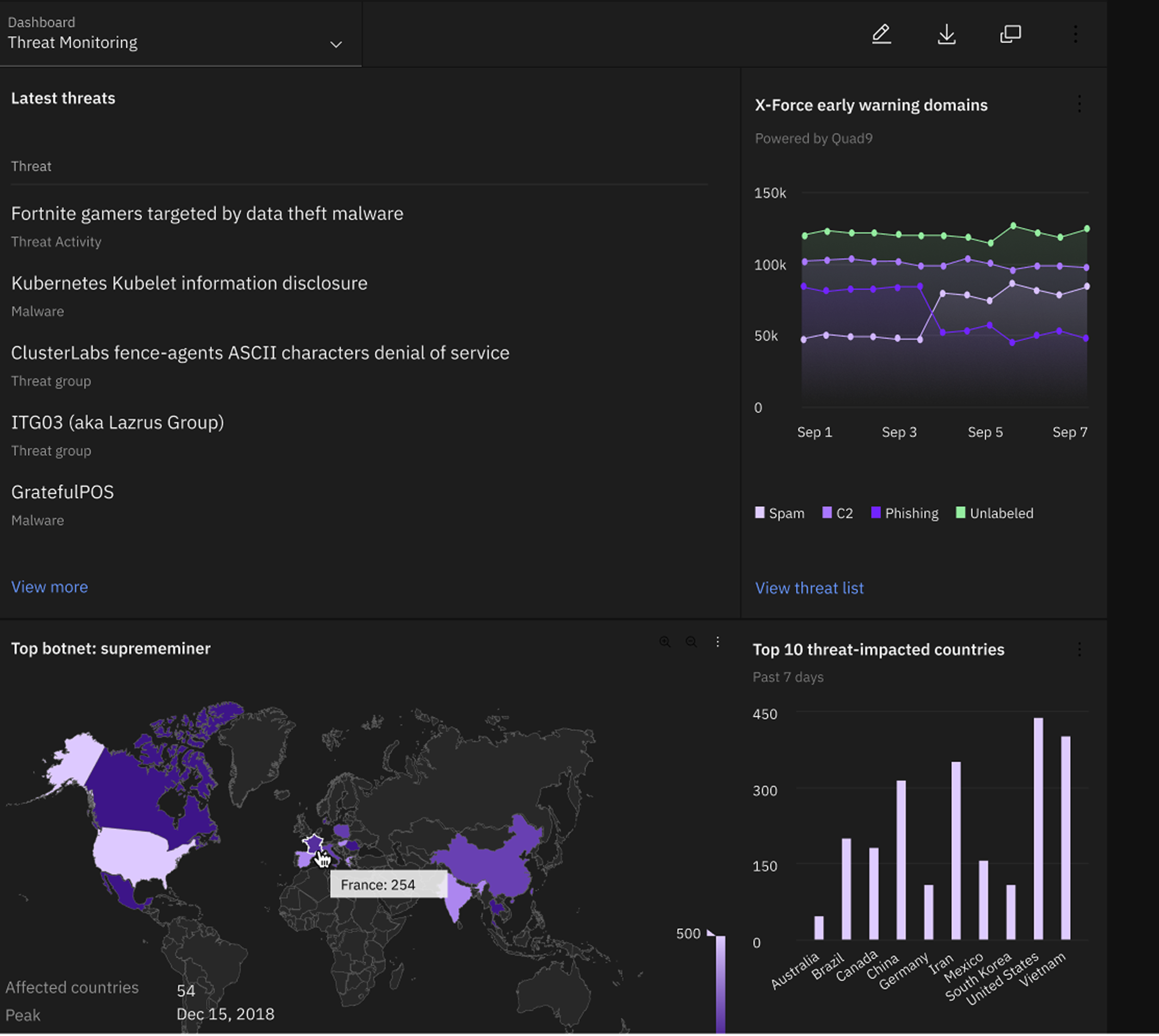
Following extensive design discussions involving researchers, technical architects, and product managers, we identified target personas and crafted tailored experiences for them. Utilizing Figma, I developed the designs and user flows below, ensuring alignment with user validation and UX feedback sessions.
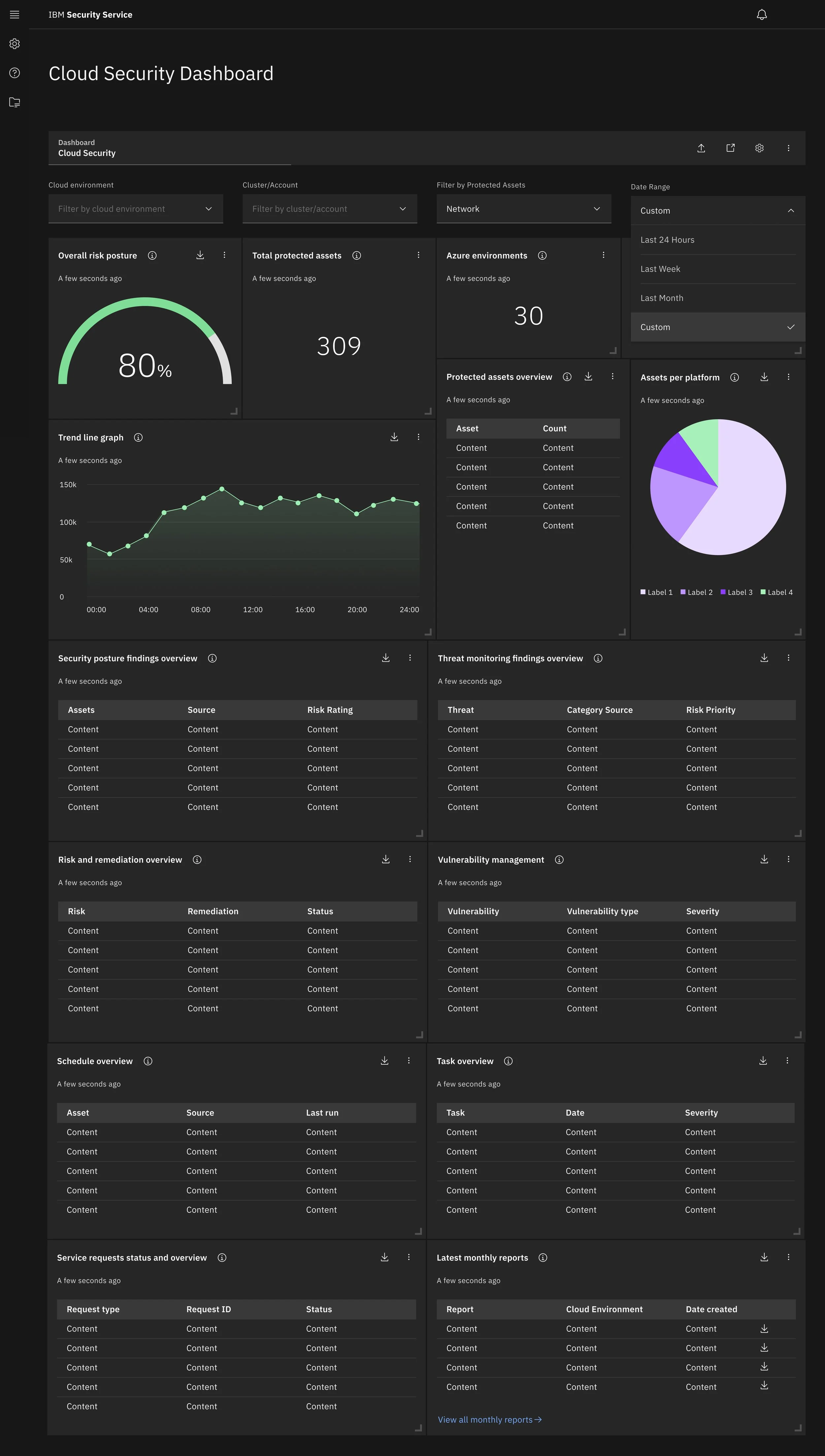
The interface aimed for contextual richness, visual appeal, and actionable elements. With the IBM Cloud Security Dashboard, users could access comprehensive functionalities seamlessly, eliminating the need to navigate multiple 3rd-party tools with complex interfaces. This single-pane-of-glass interface was meticulously designed to offer a frictionless, straightforward, and action-oriented experience.
Please note, these designs represent earlier iterations of the dashboard, devoid of user-identifiable information. They serve as examples showcasing the meticulous design thinking and effort invested in the project, although they do not reflect the final released designs.
Design
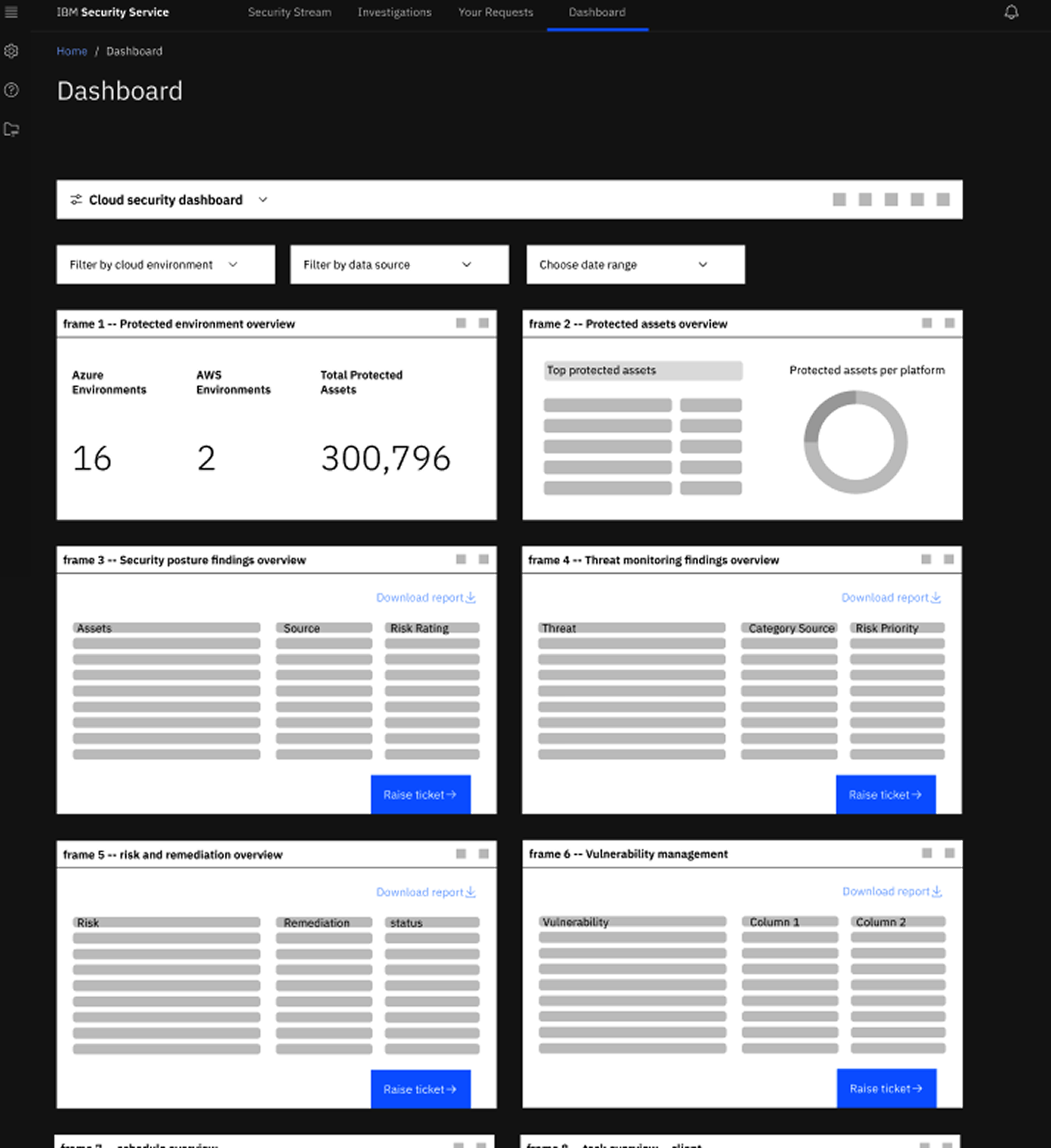
Mid Fi.
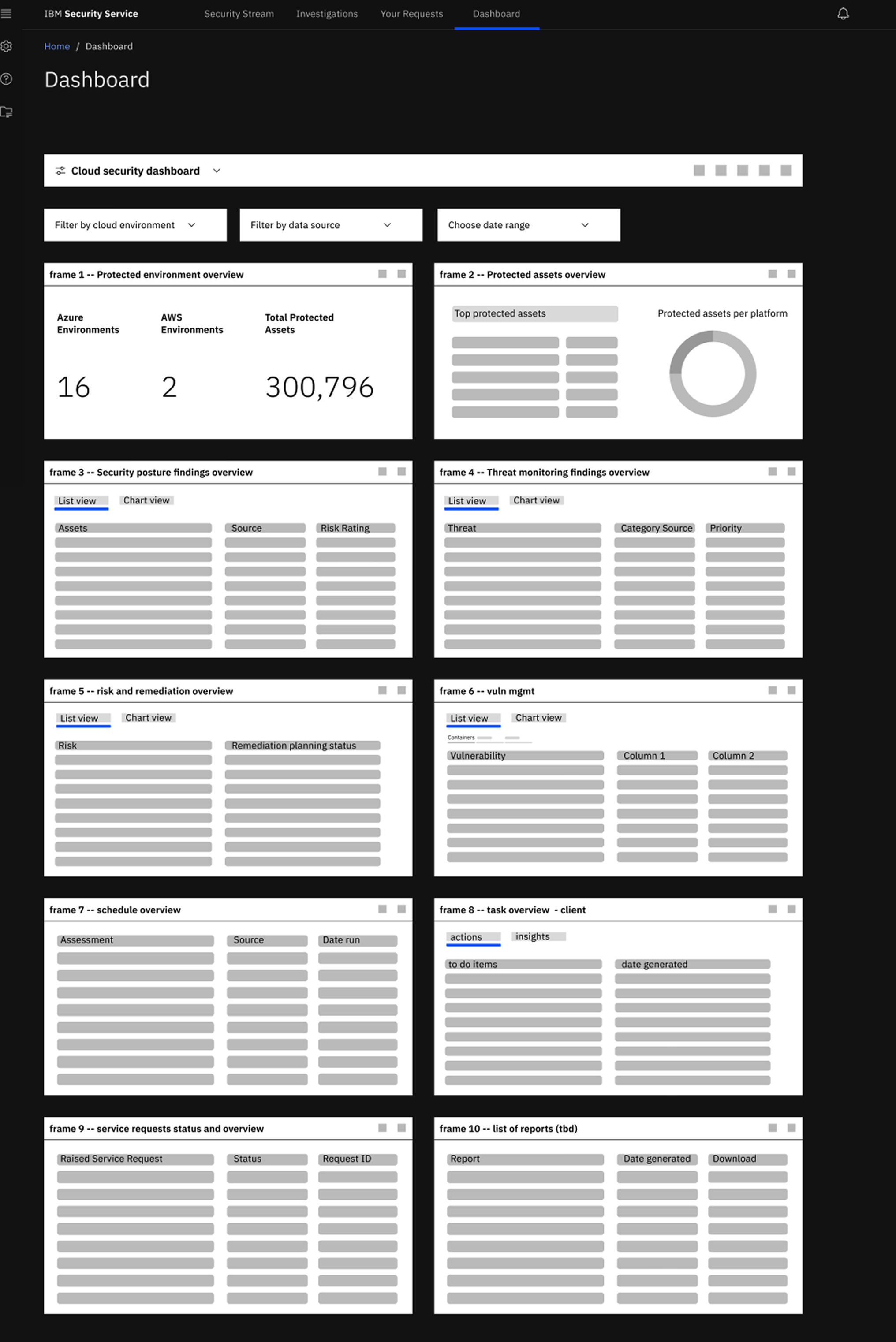
Before we could finalise the idea of Hi-Fi’s, we wanted to get a first impression of the stakeholders to gauge the approach that we were moving forward with. Several inputs were given for the recommended designs and we iterarated the designs based on the inputs. Nevertheless, we were on the rght track to our goal.
Design.
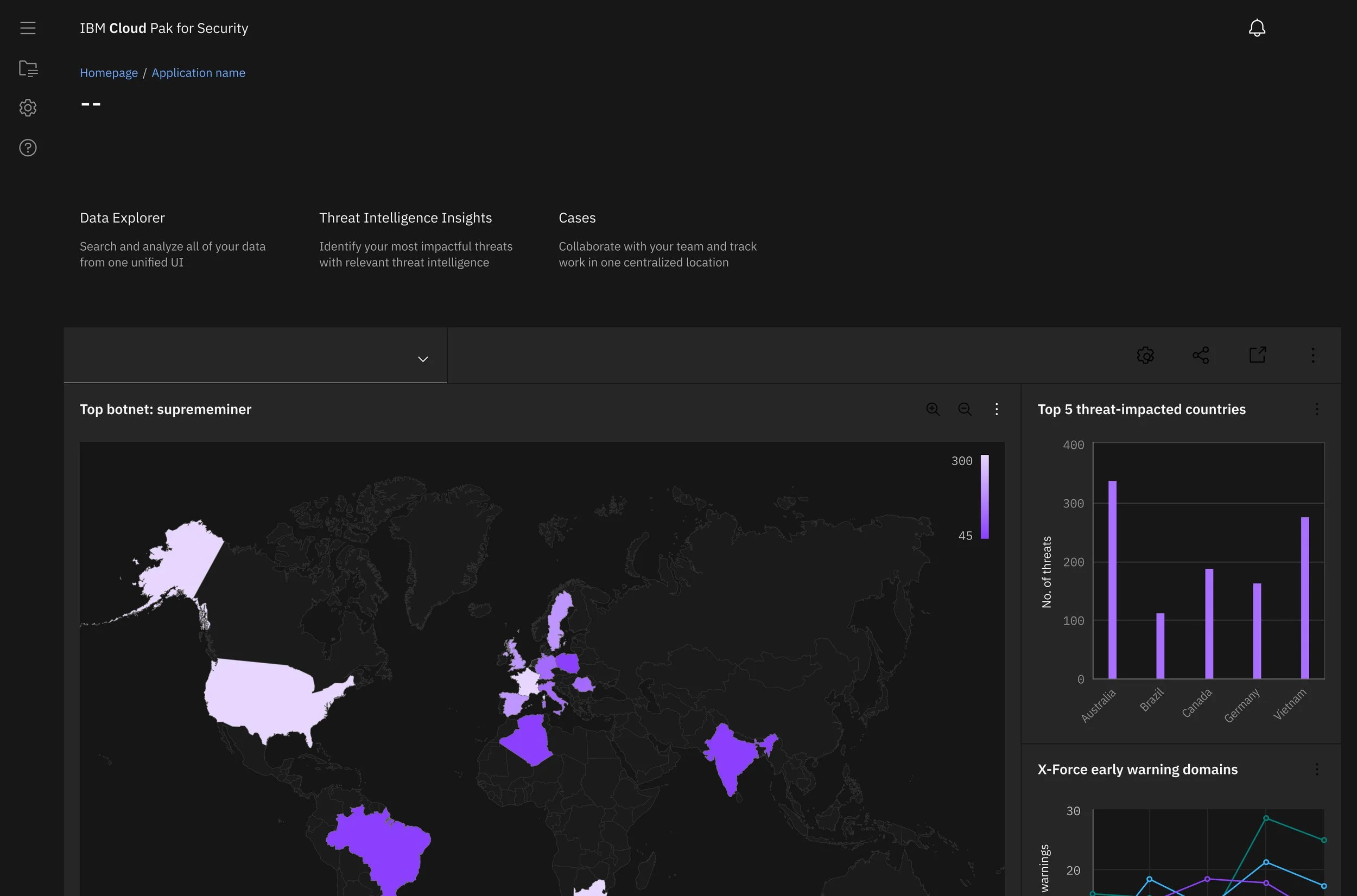
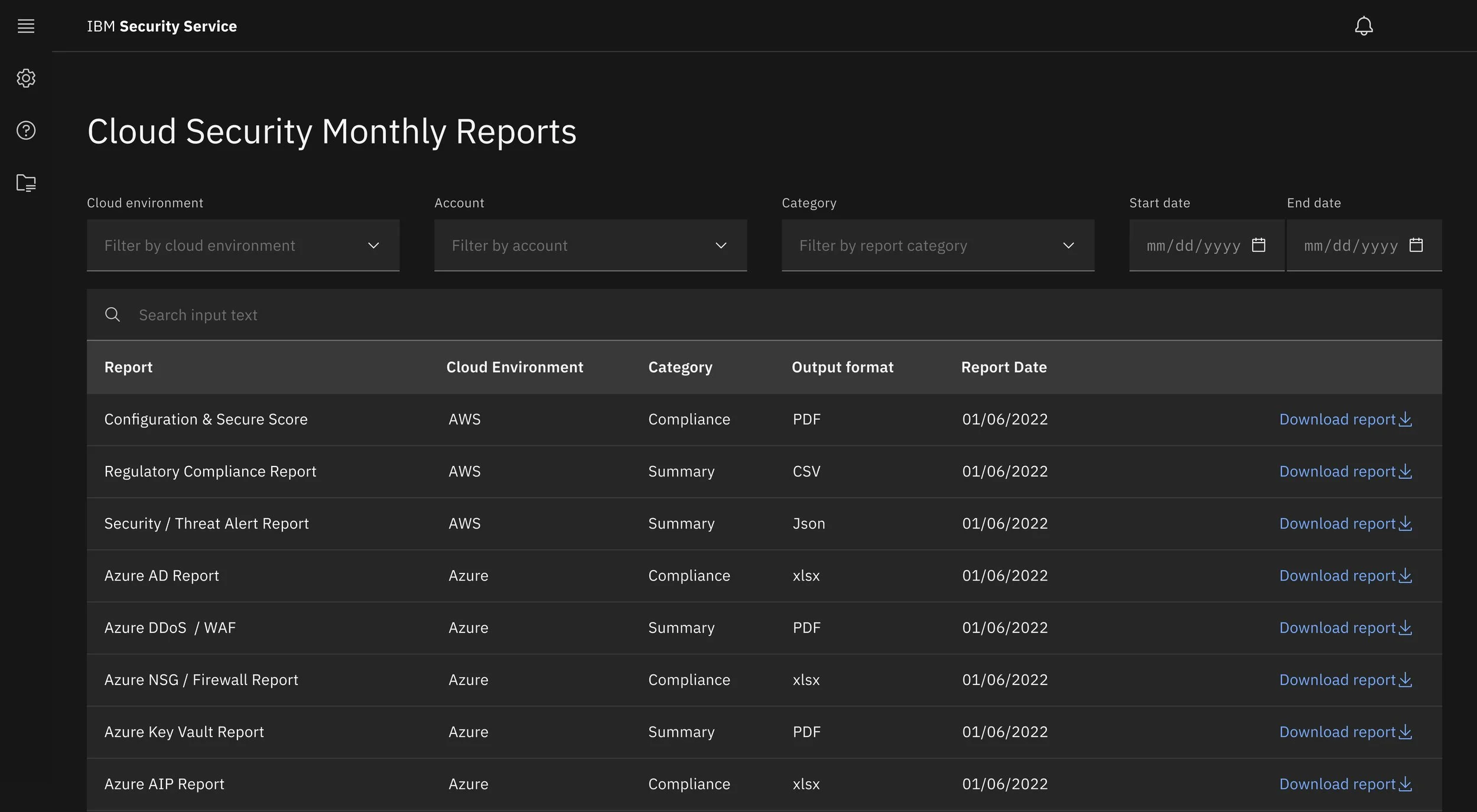
High Fi.
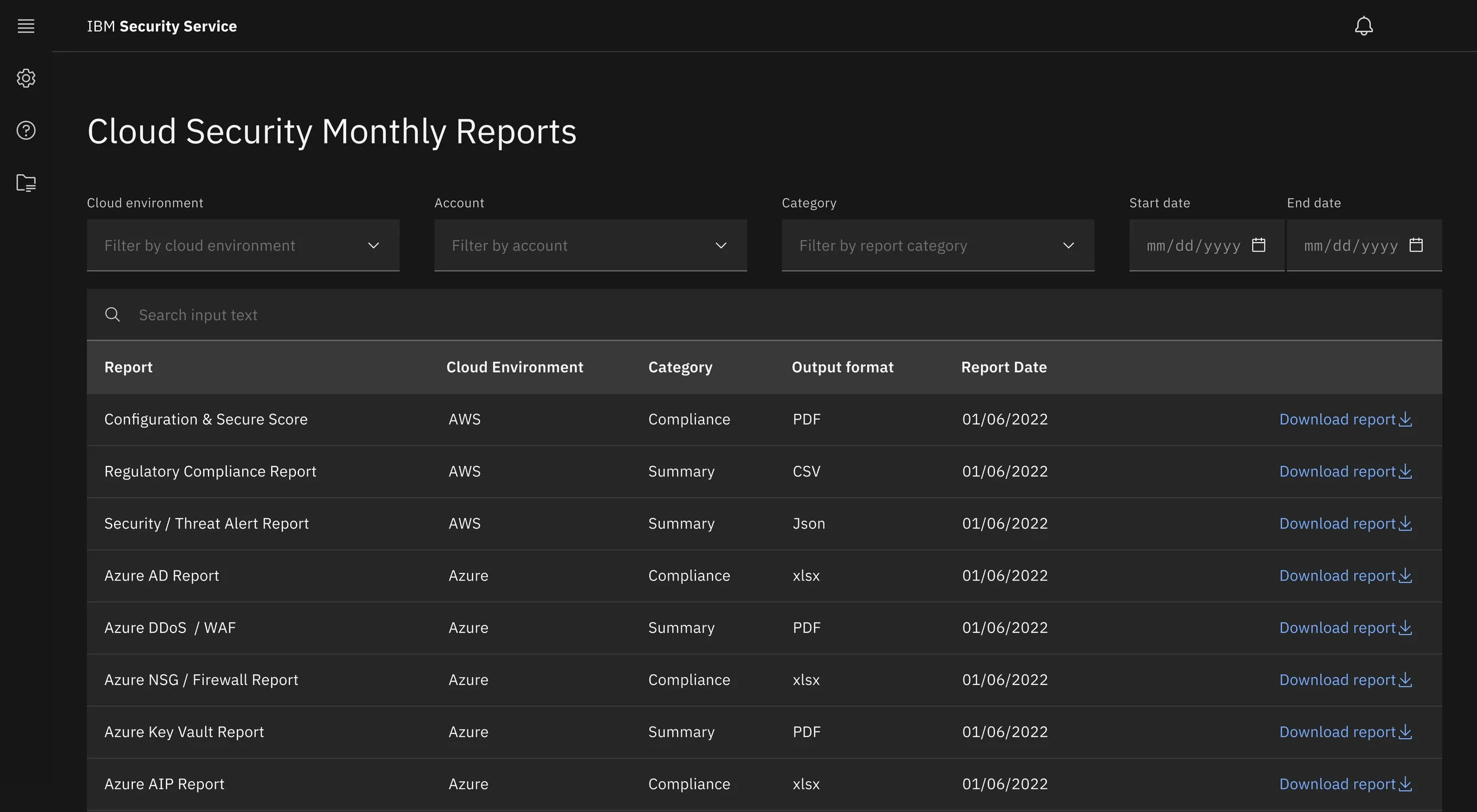
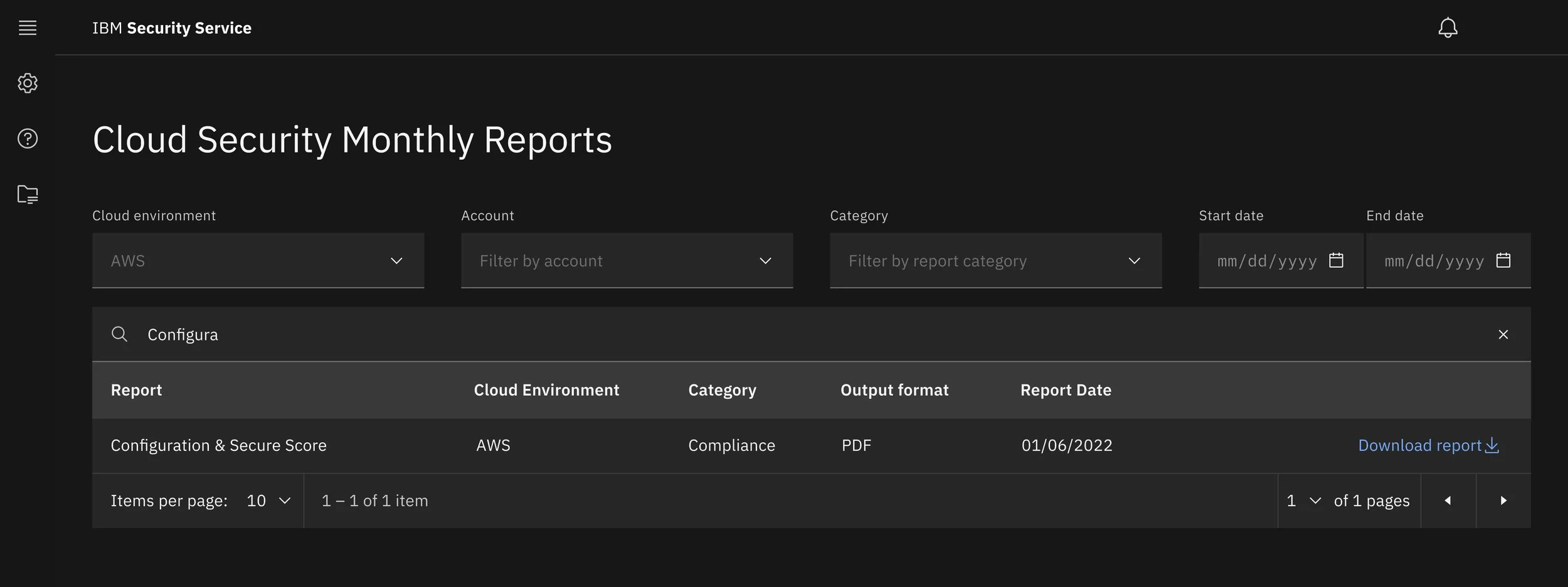
Drawing inspiration from the previously designed screens, we maintained consistent visual styling throughout the new screens. Adhering to best practices, I made sure to carefully follow each Jira ticket's specifications.
Additionally, we cleaned up naming conventions and incorporated auto layout into the pre-existing screens, improving page spacing and structure, while also allowing for future flexibility in editing.

Reflection.
This project offered me a rewarding opportunity to improve an established desktop web application. Independently enhancing the dashboard and integrating new features was particularly fulfilling. Balancing the existing style with the addition of requested features presented an engaging challenge. I relied on Jira tickets to stay aligned with project requirements and ensured consistency in screen naming for seamless developer handoff. Adhering to Redlining specifications was an integral part of my delivery process, showcasing my attention to detail and organizational abilities.